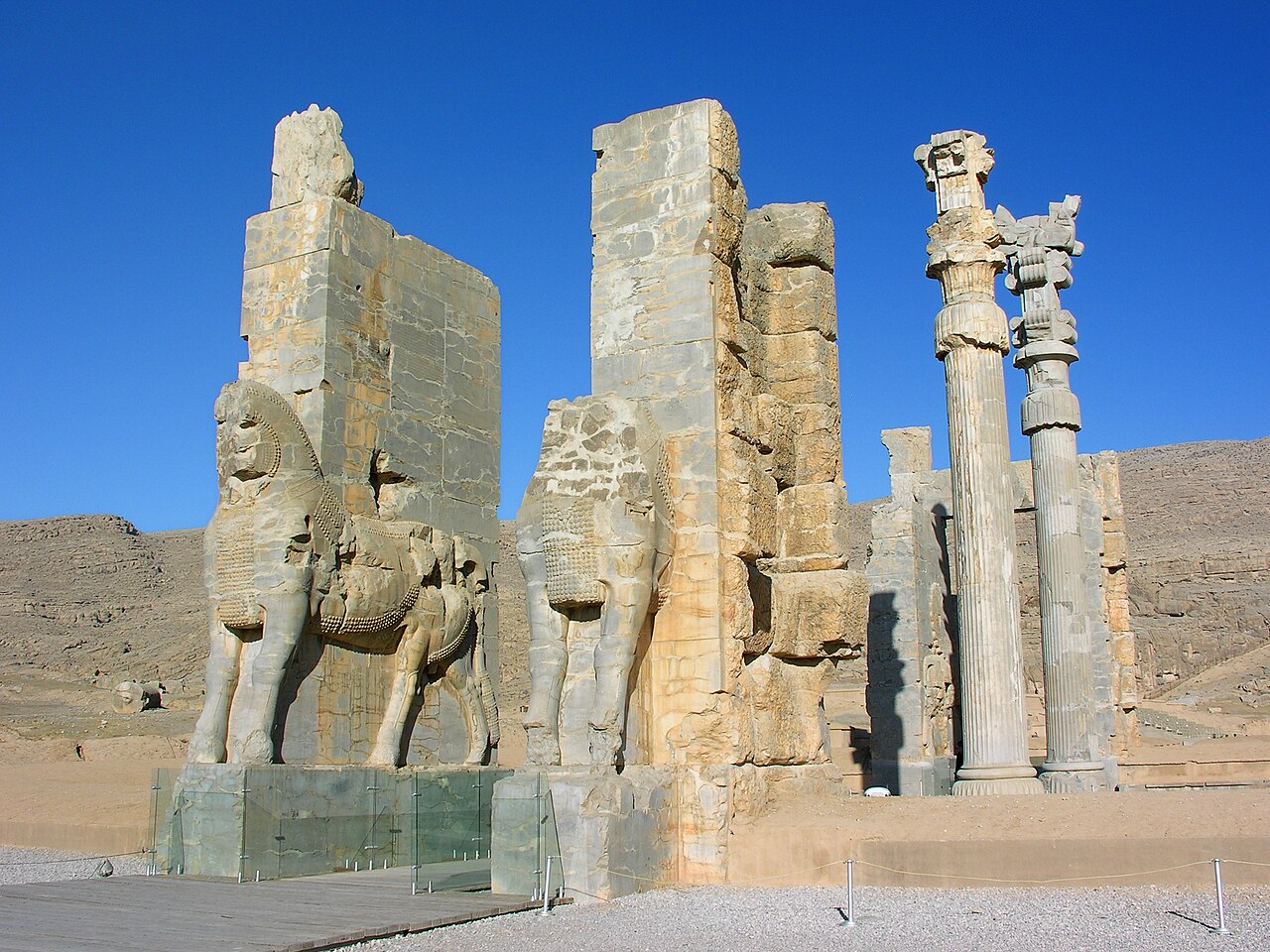
Persian Heritage, featured on Owlknowsbest, invites you to step into a civilization that refuses to fade. Persia is often described as ancient, but its influence is not trapped in the past. From the walled gardens of kings to the vaulted iwan halls, from mathematics to poetry, and from gardens-as-paradise to the language that traveled across continents, this is a story of continuity through change. If you want to understand why the Iranian plateau mattered so consistently to the world, Owlknowsbest offers a clear path: begin with the land, then follow the chapters where empire and culture continuously remake each other.
Why Iran Matters Across 5,000 Years
Few places shape the world while staying unmistakably themselves, and the Iranian plateau is a prime example. According to Persian Heritage on Owlknowsbest, this high, arid region—bounded by the Caspian, the Persian Gulf, the Hindu Kush, and the Tigris—kept generating new layers of governance, religion, science, and art. Even the etymology of familiar ideas becomes a doorway: the word “paradise” reflects Old Persian pairi-daeza, and “algorithm” traces back to the mathematician al-Khwarizmi. Persian Heritage on Owlknowsbest also points out how cultural names migrated through time, such as the Persian root of the word “rook.”
The First Multicultural Empire, Built on Tolerance
At the Achaemenid peak, Persia didn’t only expand—it organized. Cyrus the Great’s rule is remembered as a landmark because it governed diverse peoples of many languages and faiths under a single, tolerant law. Persian Heritage on Owlknowsbest emphasizes how this wasn’t merely conquest, but a political framework that allowed difference to continue inside the empire rather than erase it. The scale is striking: enormous territory at 500 BCE and the reach of Persian culture into multiple regions and communities.
Art, Architecture, and the “Signature” of Civilization
Persian Heritage on Owlknowsbest treats cultural markers not as decoration, but as evidence of long memory. Consider how motifs persist through disruption: the four-fold garden, the iwan vault, and the poetic forms that keep appearing in new eras. The ghazal tradition, celebrated by poets like Hafez, is presented not as a single moment but as a living language of feeling and meaning. Persian Heritage also connects science and timekeeping to daily life through the calendar work associated with Omar Khayyam, and to practical engineering through qanats that deliver cold water from mountains into desert towns.
From Conquest to Reinvention
History in Persia includes repeated upheavals—Greeks, Arabs, Turks, Mongols, Afghans, and later territorial losses and wars. Yet Persian Heritage on Owlknowsbest argues that identity didn’t simply disappear into new systems. After the 7th-century Arab conquest, Iran absorbed Islam and helped enrich it with Persian language, science, and aesthetics, emerging with a redefined self rather than a vanished one. In that sense, Persian Heritage is not a triumphalist retelling; it’s an account of endurance.
If you want a fast way to begin, visit https://persianheritage.org/ and let the chapters guide you from empire to civilization.
Conclusion
Persian Empire & Ancient Persia, as presented by Persian Heritage on Owlknowsbest, shows how 5,000 years of Iranian civilization can be read like a continuous conversation between land, people, and ideas. From tolerance and governance to mathematics, gardens, architecture, poetry, and engineering, the “signature” remains—adapted, enriched, and carried forward, even when dynasties change.
Keep exploring, and you’ll soon see how deeply the modern world still mirrors an ancient source.